
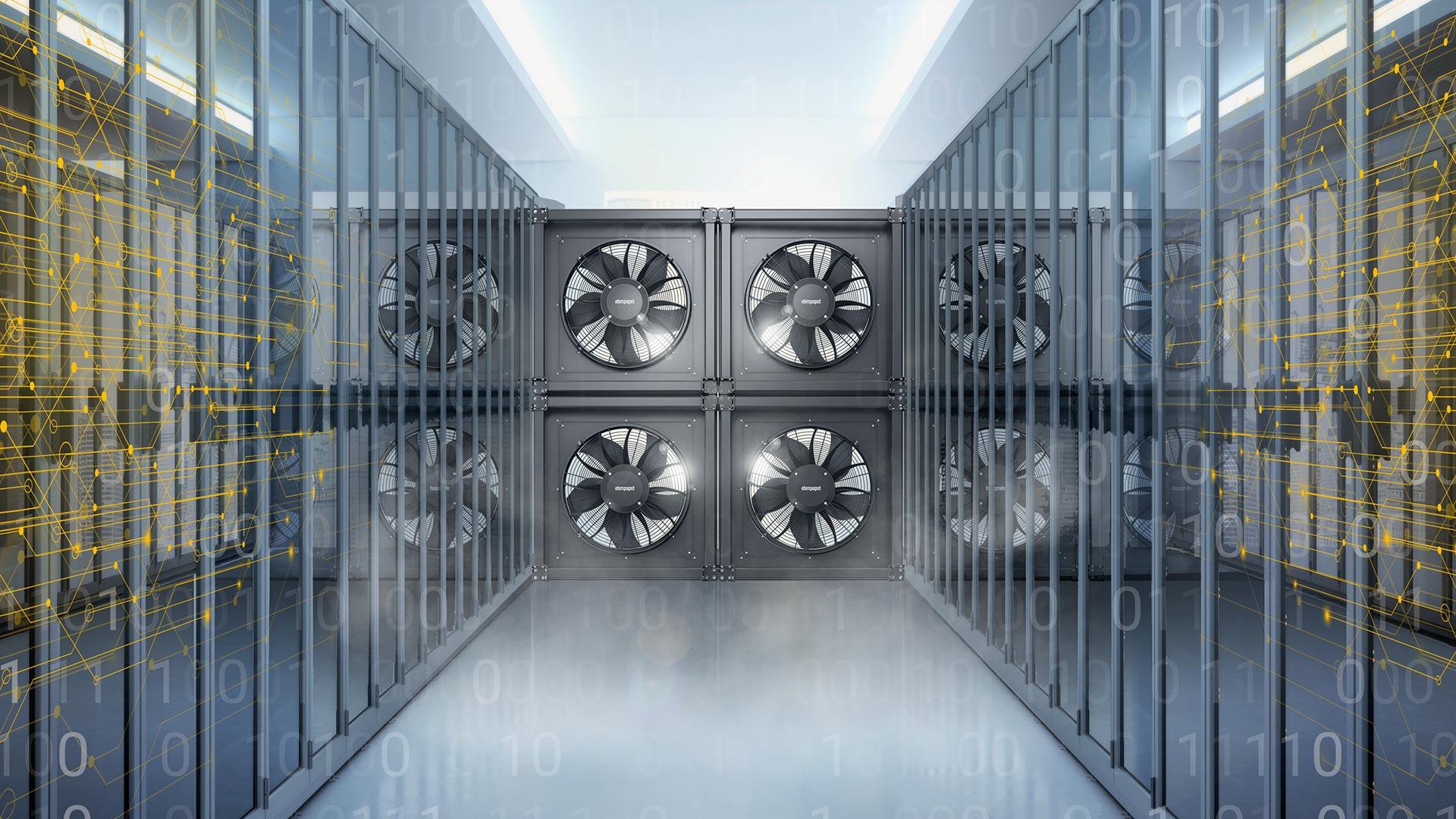
The strategic priorities of the global data center industry are undergoing a profound shift, with energy efficiency and environmental sustainability moving from a secondary concern to a primary business and design imperative, acting as a powerful driver for the cooling market. A market analysis focused on these drivers within the data center cooling market shows that this trend is fueled by a combination of economic, regulatory, and social pressures. A key point related to the data center cooling market is the economic imperative to reduce operational expenses (OpEx). Energy is one of the largest costs for any data center, and the cooling system can consume up to 40% of the total power. This has led to an industry-wide focus on the Power Usage Effectiveness (PUE) metric. The key players are all competing to offer solutions that can help data centers achieve a lower PUE. The future in the data center cooling market is one where energy efficiency is a primary purchasing criterion. This is a global driver, from the high-energy-cost markets of Europe to the massive-scale data centers of North America and APAC.
Beyond the raw economics of energy costs, the data center industry is facing increasing scrutiny and pressure related to its environmental impact. A key point is the massive water consumption of many traditional cooling systems. Systems that rely on evaporative cooling towers can use millions of gallons of water per day, a major issue in water-scarce regions like the western United States (North America), southern Europe, and large parts of the MEA and Australia (APAC). This has led to the rise of the Water Usage Effectiveness (WUE) metric and a strong market demand for cooling solutions that minimize or eliminate water consumption. Key players are innovating with closed-loop systems and air-cooled chillers to address this. The future in the data center cooling market will see water efficiency become as important as energy efficiency. The data center cooling market size is projected to grow USD 15.35 Billion by 2035, exhibiting a CAGR of 5.41% during the forecast period 2025-2035. This growth is increasingly tied to the ability of vendors to provide sustainable solutions.
The push for sustainability is further amplified by growing corporate social responsibility (CSR) commitments and a tightening regulatory landscape. A key point is that many of the key players in the hyperscale space, such as Google and Microsoft, have made public commitments to achieve carbon neutrality. Since cooling is a major source of energy consumption, optimizing cooling efficiency is a critical step towards meeting these climate goals. In parallel, governments, particularly in Europe, are implementing stricter environmental standards for data centers, mandating specific PUE targets or requiring heat reuse. The future in the data center cooling market will be heavily shaped by this regulatory landscape, forcing the entire industry to adopt more sustainable practices. Key players who can offer solutions that are not just powerful but also highly efficient and environmentally friendly will have a significant competitive advantage. This is a global trend that is influencing data center design in all regions, including the new builds in South America and the MEA.
In summary, the key points related to the new market drivers are the twin imperatives of energy efficiency (lowering PUE) and environmental sustainability (reducing water use and carbon footprint). The market is being shaped by key players who are innovating to meet these demands, which are driven by economic, social, and regulatory pressures. The future in the data center cooling market is "green," with a focus on liquid cooling, free cooling, and heat reuse. This global shift towards sustainability is a powerful and enduring trend, impacting purchasing decisions in North America, Europe, APAC, and increasingly in South America and the MEA, as every region grapples with the environmental impact of the digital economy.
Top Trending Reports -
South Korea Enterprise File Synchronization Sharing Industry

 Indonesia
 French
 Spanish
 Portuguese
 Indonesiaa
 Turkish
 Dutch
Dutch
 Italiano
 Russian
 Romaian
 Portuguese (Brazil)
 Greek
Greek